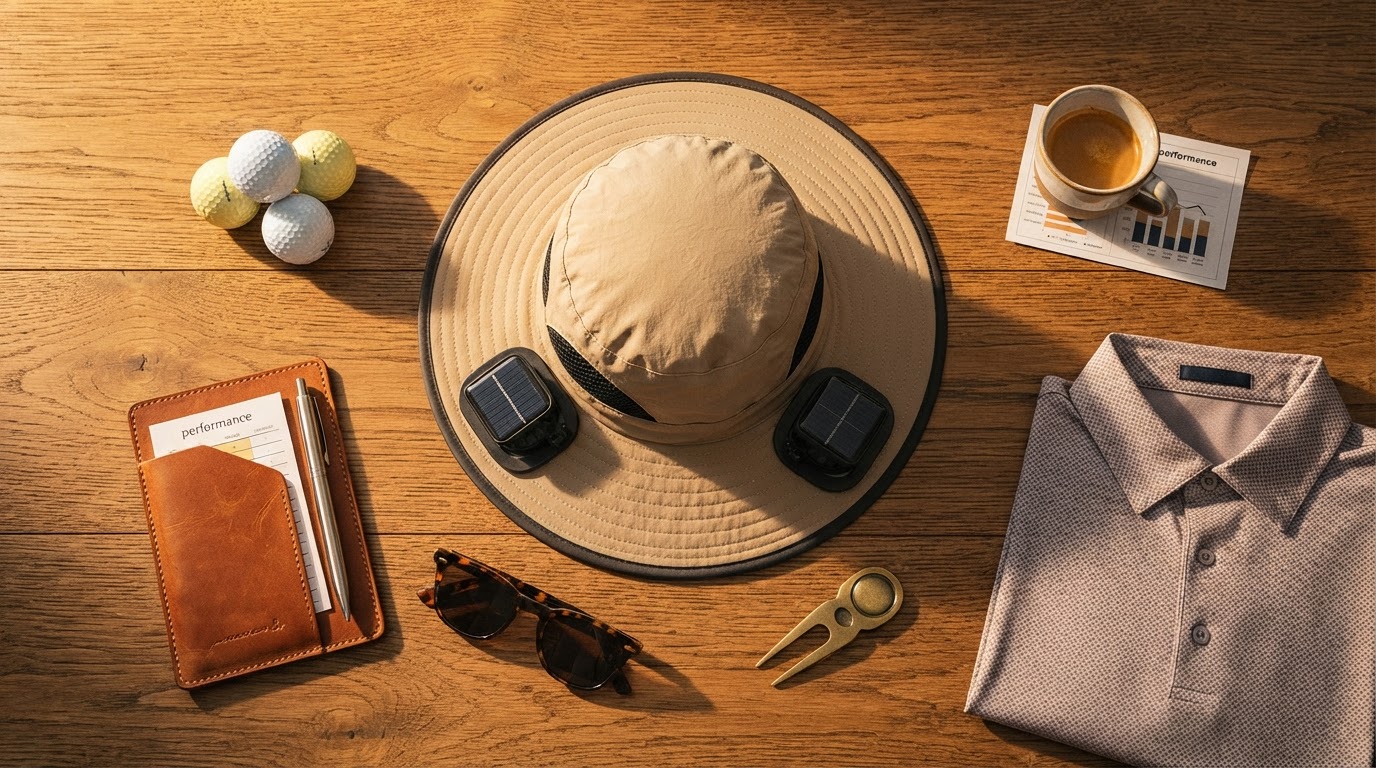
Solar Cooling Hat Performance for Professional Golfers
 Jordan HaleStaff Writer
October 17, 2026
This analysis explores the efficacy of integrated solar fan technology for temperature regulation on the golf course. It is intended for competitive and recreational golfers seeking to mitigate heat fatigue during extended play.
The Thermal Challenge on the Back Nine
The heat on a fairway isn't just about the temperature reading on a smartphone; it is about the radiant energy reflecting off the grass and the stagnant air trapped beneath a traditional cap. By the time I reached the fifth hole during a recent mid-July round, the humidity felt like a physical weight. The first thing I noticed was how quickly my focus drifted when my core temperature began to climb. For golfers, this isn't just a comfort issue—it is a performance metric. Heat exhaustion leads to micro-adjustments in grip and swing speed that can devastate a scorecard. Traditional headwear often acts as an insulator, trapping the heat rising from the scalp. While an [evaporative cooling hat for golf](/blog/evaporative-cooling-hat-for-golf) offers relief through moisture wicking, it sometimes falls short in high-humidity environments where sweat cannot evaporate efficiently.
According to a review by the Freakin' Finds YouTube channel, which tested various outdoor gadgets, the mechanical airflow provided by a fan can be the deciding factor in whether a wearable device actually works in real-world conditions. The struggle for most golfers is finding a balance between sun shielding and ventilation. A standard wide-brim hat provides shade but creates a pocket of dead air around the face. This is where the integration of active cooling becomes necessary. Many players have experimented with a [cooling safari hat solar fan](/blog/cooling-safari-hat-solar-fan) to achieve broader coverage, yet the weight and balance of the fan motor remain critical variables. If the hat is front-heavy, it disrupts the putting stroke; if the fan is too weak, it is merely a novelty. The goal is a consistent, laminar flow of air that breaks the thermal boundary layer against the skin without requiring the wearer to carry a battery pack in their pocket.
Solar Cooling Hat Engineering and Airflow
The Solar Cooling Hat addresses these specific golfing pain points by utilizing high-efficiency monocrystalline solar cells embedded directly into the crown. Unlike older models that felt like wearing a science project, the modern iteration integrates the fan into the brim or crown to maintain a neutral center of gravity. It turns out that the placement of the fan is just as important as its RPM. By positioning the intake to pull air across the forehead and temples—areas with high vascularity—the hat facilitates a more rapid cooling sensation. This active movement of air is a significant upgrade over a standard solar powered fan hat for golf that might only offer passive venting.
The technical specifications of the Solar Cooling Hat focus on a dual-power architecture. While the solar panels provide primary power during the peak sun of a 2:00 PM tee time, many versions now include a USB-rechargeable backup to ensure the fan keeps spinning when the clouds roll in or when you are lining up a shot in the shade of a treeline. This hybrid approach mirrors the reliability needed for a four-hour round. Unlike a heavy solar powered cooling cap, the materials used in the Solar Cooling Hat are lightweight synthetics that don't absorb sweat. The fan itself is whisper-quiet, a necessity for the etiquette of the green. I keep coming back to the sensation of that constant breeze; it effectively lowers the perceived temperature by several degrees, allowing for better concentration on the green. The ventilation isn't just about the fan, either; the hat utilizes a breathable wide-brim design that ensures air can exit the back of the hat even as the fan pushes it in the front, preventing the "ballooning" effect common in poorly designed ventilated headwear.
Selection Criteria for the Modern Golfer
Choosing the right solar-powered headwear requires a move beyond simple aesthetics. When evaluating a hat for the course, the focus must be on the stability of the fan during a full-velocity swing and the quality of the solar conversion. A hat that stops every time you walk into the shadow of the clubhouse is a distraction, not a tool. If you are looking for maximum shade, a wide brim hat with solar fan is the standard, but for those who prefer a traditional silhouette, the solar-integrated baseball cap style is often more aerodynamic.
Before making a purchase, consider this decision framework to ensure the gear matches your style of play:
- Power Source Versatility: Ensure the hat features both solar panels and a USB-rechargeable internal battery for consistent airflow in varying light conditions.
- Weight Distribution: Check that the fan motor is centered or counterbalanced so it does not pull the brim down during your follow-through.
- Noise Level: Opt for brushless motors which provide higher durability and quieter operation, ensuring you don't disturb your playing partners.
- Brim Rigidity: The brim must be sturdy enough to support the fan and solar panels without sagging or flapping in the wind.
- Moisture Management: Look for internal sweatbands made of antimicrobial materials to prevent stinging eyes and odor buildup over a long season.
- Adjustability: A secure fit is paramount; look for adjustable toggles or straps that keep the hat in place during high-wind conditions on open fairways.
To see the full range of options designed for the course, Shop Solar Cooling Hat here.