Solar Cooling Hat Performance During Prolonged Outdoor Work
 Daniel OkaforField Tester
September 1, 2026. This review examines the practical utility and cooling efficiency of the Solar Cooling Hat during high-heat exposure. It is written for professionals and hobbyists who spend six or more hours daily under direct sunlight.
The Reality of Working in Triple-Digit Heat
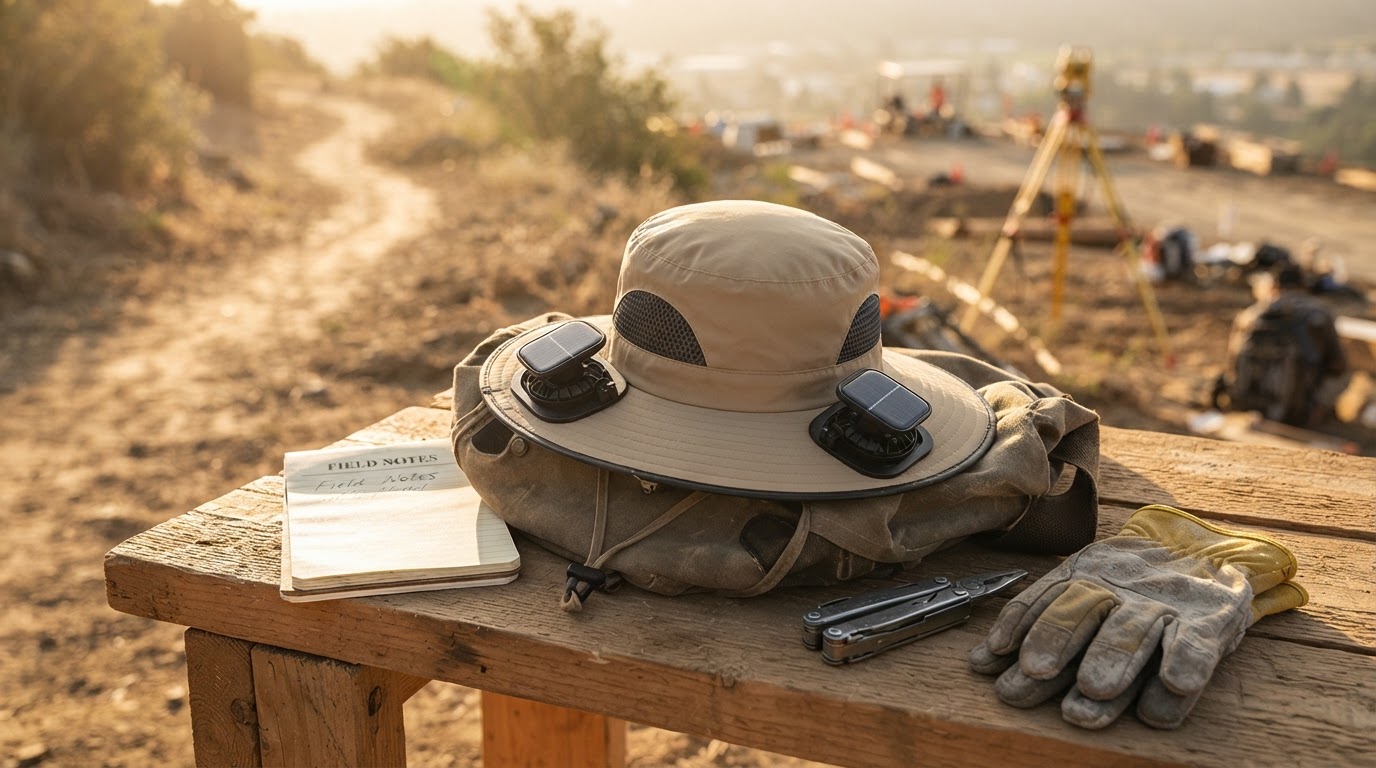
Testing this for two weeks in the high desert, where ambient temperatures regularly hit 104 degrees Fahrenheit. The primary challenge in these environments isn't just the heat; it is the stagnation of air around the face and neck. When you are stationary or working in a wind-shielded area, sweat stops evaporating, and your internal temperature spikes. According to My Cooling Store, which tracks developments in Solar Fan & Evaporative Cooling Hats, the integration of active airflow is what separates modern sun protection from traditional straw or felt options. In my experience, a standard wide-brim hat often traps a pocket of hot, humid air against the scalp, which can lead to rapid fatigue. This is a common complaint among those seeking [cooling headgear for extreme heat](/blog/cooling-headgear-for-extreme-heat), where passive ventilation simply fails to keep up with the body's thermoregulation needs. During my first few days on-site, the sheer weight of traditional heavy-duty headgear contributed to neck strain, making the search for a lightweight, powered alternative a necessity rather than a luxury.
How the Solar Cooling Hat Manages Thermal Load

Photo by 🇻🇳🇻🇳Nguyễn Tiến Thịnh 🇻🇳🇻🇳 on Pexels
Selecting the Right Solar Ventilation System

Choosing a hat in this category requires looking past the novelty and focusing on the mechanical durability of the fan and the quality of the solar cells. In my testing, cheaper units found on marketplaces like eBay, which list various solar fan hat products for sale, often lack the weather-stripping needed to survive a sudden downpour or heavy sweat. A better layout is to opt for a model with a slightly wider chin strap; at high fan speeds, a secure fit is essential to prevent the vibration from shifting the hat. When evaluating your options, you need to consider the specific environment—dry heat vs. humidity—as this dictates whether you need pure airflow or an evaporative liner. For those in high-humidity areas, the fan is non-negotiable because sweat won't evaporate on its own. If you are currently comparing these to a hard hat solar fan attachment, remember that the integrated hat is significantly lighter for non-industrial tasks.
- Check for a dual-power source (Solar + USB) to ensure functionality in overcast conditions.
- Verify the brim width is at least 3 inches for adequate UV shielding.
- Look for moisture-wicking sweatbands that complement the fan’s airflow.
- Ensure the fan housing is removable for easy cleaning of the hat fabric.
- Prioritize monocrystalline solar panels for better energy conversion in low light.